

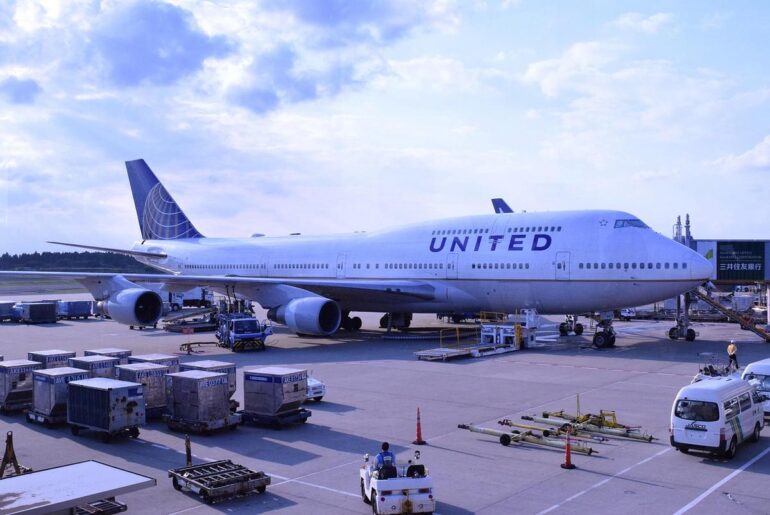
Financial Outlook
United Airlines has revised its earnings guidance for the current year, now expecting adjusted profit between $9 and $11 per share. This update contrasts with an earlier projection of between $11.50 and $13.50 per share. The airline noted that its third-quarter estimate aligns with what market experts had predicted. The latest guidance comes amid continued operational challenges at the Newark Liberty International Airport hub that have affected pretax margins.
Earnings and Revenue Figures
In its second-quarter report, United Airlines surprised market analysts by beating earnings estimates. Adjusted earnings per share were reported at $3.87, compared with the anticipated $3.81. Total revenue for the quarter reached $15.24 billion, marking a modest increase of 1.7% from the previous year, although this figure fell slightly short of the $15.35 billion consensus. Net income declined by 26% to $973 million, or $2.97 per share, while one-time adjustments brought reported earnings to $1.27 billion. Despite these mixed results, the performance indicates that the company is managing to maintain operational discipline in difficult circumstances.
Unit revenue, however, decreased by 4% during the quarter. The contraction was most evident in domestic passenger revenue per seat mile, which dropped 7% on an annual basis. Although international travel remains a bright area in the airline's portfolio, there was a small decline in the Europe division’s performance, with revenue falling 2.2% over the past year. In contrast, revenue from premium sales improved by 5.6% compared with last year, while basic-economy ticket sales saw a 1.7% rise. These varied trends suggest that passenger preferences are shifting toward higher-quality experiences even as overall travel activity faces pricing pressure among cost-conscious consumers.
Operational and Industry Challenges
The airline has encountered difficulties at its Newark hub that have had a measurable impact on its financial margins. Restrictions implemented at Newark in May—owing to air traffic controller staffing issues and related concerns—reduced the pretax margin by 1.2 percentage points during the second quarter. Looking ahead, company officials forecast a further margin compression of 0.9 percentage points in the upcoming quarter. Industry competitors have also been adjusting their outlooks. Recently, Delta Air Lines restored its full-year forecast at levels lower than its initial estimates, a move reflecting similar trends in capacity reduction plans adopted by many carriers after the peak summer travel period, which is anticipated to recede around mid-August.
Looking Ahead
CEO Scott Kirby expressed optimism about the recovery in travel demand after a challenging start to 2025. He noted that overall market conditions have become more settled in recent months, lending confidence that the rest of the year could yield better results. The company is preparing for third-quarter performance with an expectation of adjusted earnings between $2.25 and $2.75 per share—a projection that aligns with current analyst estimates. In light of earlier economic uncertainty, United had issued dual projections: one scenario for a stable market environment and another for a scenario marked by economic slowdown, forecasting per-share earnings between $7 and $9 in the latter case. With current guidance near the midpoint of industry expectations, investors are likely to view the revised outlook as a balanced assessment amid shifting market forces.