

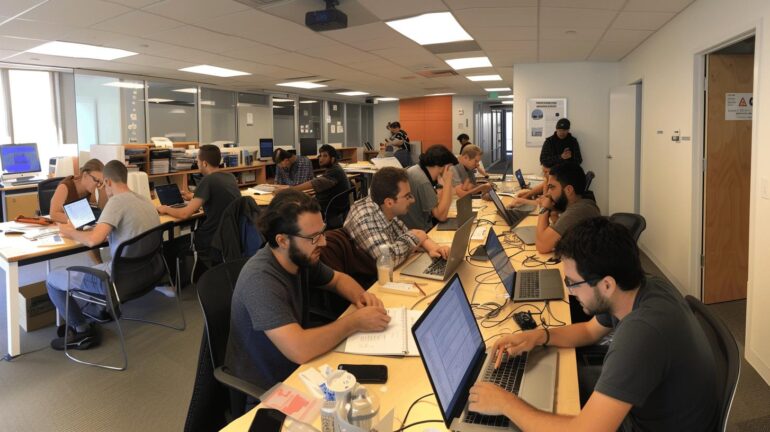
Can hackathons truly transform how companies innovate? These intensive, time-bound events go beyond mere problem-solving – they’re a breeding ground for innovation within organizations. By creating a platform for employees to explore new ideas and technologies, hackathons foster creativity and unlock the potential for groundbreaking solutions. Internal competitions, like those held by giants such as Facebook and Google, have sparked new product features and innovations. Embracing this approach could be the key to staying ahead in the fast-paced world of product innovation. Discover how hackathons drive new ideas and solutions within firms.
Understanding the Role of Hackathons in Product Innovation
Hackathons are intensive, time-bound events that focus on solving problems or creating new products within organizations. These sessions promote creativity and innovation by allowing employees to explore new ideas and technologies. Hackathons are typically designed to foster a collaborative atmosphere where participants work against the clock to deliver potential solutions.
How do hackathons contribute to product innovation? By providing a platform for employees to experiment with new ideas, hackathons open up opportunities for groundbreaking developments. Participants can test unconventional approaches without the usual constraints of their daily roles. The intense environment encourages rapid prototyping, allowing teams to iterate quickly on ideas. This process often leads to the identification of novel solutions and the development of innovative products that may not have emerged through traditional channels.
Successful hackathons can yield a variety of outcomes. They might result in the creation of new products that enhance a company's offerings. Additionally, they can lead to process improvements that streamline operations or uncover new business opportunities that expand a company's market reach. By fostering a culture of innovation, hackathons play a crucial role in keeping companies at the forefront of their industries.
Internal Competitions: A Catalyst for New Ideas and Solutions

Internal hackathons serve as a powerful tool for fostering collaborative creativity within organizations. By encouraging employees to work across departmental lines, these competitions break down silos and bring together diverse perspectives. This collaborative environment is fertile ground for generating novel ideas and developing new solutions. The time-bound nature of hackathons pushes participants to think quickly and creatively, often leading to breakthroughs that might not occur in a routine setting. Employees are motivated to step outside their usual roles, allowing for experimentation with new technologies and approaches, which can lead to innovative products and solutions.
Examples of successful innovations from internal competitions highlight the potential impact of these events:
- Facebook "Like" button
- Gmail offline mode
- Process improvements
- New business opportunities
- Innovative software features
The success of internal hackathons largely hinges on cross-departmental collaboration, which is essential for sparking creativity and innovation. When employees from different areas of expertise come together, they share unique insights and skills, leading to a richer pool of ideas. This diversity of thought not only enhances problem-solving capabilities but also drives the development of solutions that are more comprehensive and impactful. By enabling teams to transcend traditional boundaries, internal hackathons play a crucial role in the innovation process, ultimately contributing to a company's competitive advantage and market leadership.
Organizing Effective Hackathons for Innovation
Organizing an effective hackathon requires clear objectives and proper resource allocation. What is the importance of clear objectives in a hackathon? The clarity of objectives helps participants understand the goals and focus their efforts on developing relevant solutions. By clearly defining what the hackathon aims to achieve, organizations can guide participants toward desired outcomes. Resource allocation is equally critical, as providing the necessary tools and support ensures participants can work efficiently and effectively. Without these foundational elements, the potential for innovation may be significantly hindered.
To foster creativity and innovation, several strategies can be employed. One effective approach is offering incentives to motivate participants. Why are incentives important in hackathons? Incentives drive engagement and encourage participants to push the boundaries of creativity. These rewards can range from monetary prizes to recognition within the company. Ensuring diversity among participants is another key strategy, as it brings together a wide range of perspectives and skills. This diversity fosters an environment where interdisciplinary teams can tackle challenges from multiple angles, leading to more innovative solutions. Additionally, presenting diverse challenges that require out-of-the-box thinking further stimulates creative problem-solving.
Hackathons provide numerous benefits, including increased employee engagement and enhanced problem-solving skills. How do hackathons enhance employee engagement? By involving employees in dynamic, hands-on projects, hackathons create a sense of ownership and excitement that boosts morale. The collaborative nature of these events also enhances team cohesion and communication. Furthermore, the problem-solving skills honed during hackathons can be applied to everyday tasks, improving overall efficiency. The concentrated effort to innovate within a short timeframe allows employees to develop rapid prototyping skills, which are invaluable in fast-paced business environments.
Strategies to Encourage Creativity During Hackathons
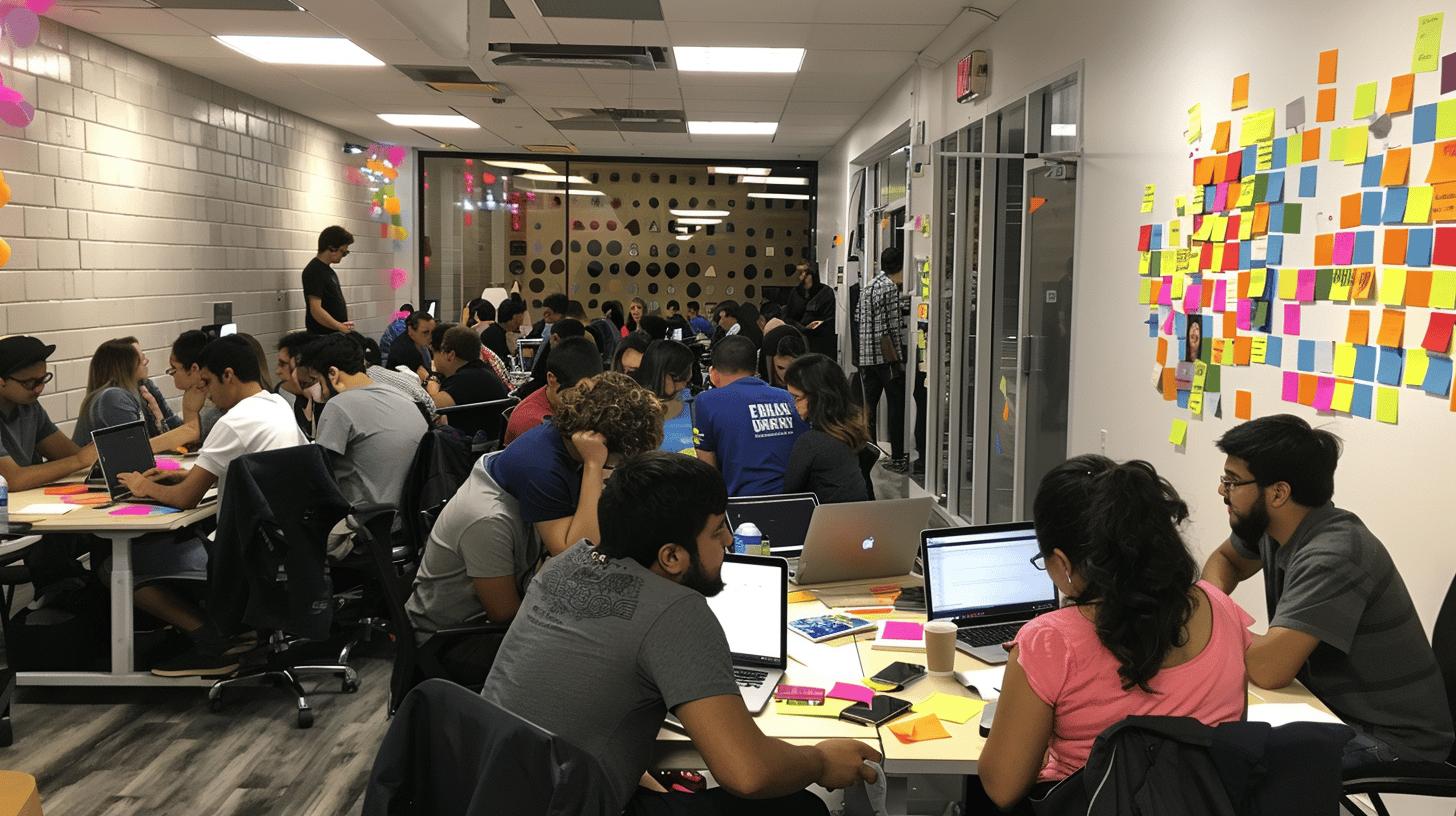
Fostering a creative environment during hackathons is crucial for driving innovation and generating fresh ideas. What makes a creative hackathon environment? A creative environment is one that inspires participants to think beyond traditional boundaries and explore unconventional solutions. This involves creating a space where employees feel empowered to experiment and take risks without fear of failure. By providing a supportive atmosphere, organizations can motivate participants to engage in solution-driven thinking, leading to more effective creative problem-solving. Encouraging open communication and collaboration among team members further enhances the creativity of the hackathon, allowing for the cross-pollination of ideas across different disciplines.
- Setting broad themes
- Offering incentives
- Ensuring diversity among participants
- Encouraging risk-taking
Implementing these strategies enables teams to develop innovative solutions that might not emerge in conventional settings. Why do these strategies work? Broad themes provide flexibility, allowing participants to explore a wide range of ideas. Incentives serve as motivation, driving participants to push their creative limits. Diversity among participants brings varied perspectives, enhancing the ideation process. Finally, encouraging risk-taking removes barriers to innovation, allowing ideas to flourish. Together, these elements create a dynamic environment where creativity thrives, resulting in groundbreaking ideas and solutions that can significantly advance product innovation.
Case Studies: Success Stories from Internal Hackathons
Notable companies such as Facebook and Google have leveraged internal hackathons to fuel their innovation pipelines. These events have served as the breeding ground for some of their most successful products and features. Facebook's "Like" button, for instance, originated from a hackathon, showcasing the platform's potential in fostering tech industry innovation. Similarly, Google's Gmail offline mode was born from a collaborative effort during one of its internal hackathons. By encouraging team collaboration, these companies have effectively harnessed the collective creativity and technical skills of their employees. This approach not only accelerates the development of prototypes but also allows for rapid iteration and refinement of ideas, ultimately leading to groundbreaking innovations.
The impact of these hackathon success stories extends beyond product development, significantly influencing business strategies. Innovations emerging from hackathons often align with broader company goals, enhancing the strategic direction and competitive positioning of the organization. For example, the features developed can lead to improved user engagement and satisfaction, directly contributing to a company's market leadership. Moreover, the collaborative nature of hackathons fosters a culture of innovation, encouraging employees to continuously seek new solutions and improvements. This culture not only drives ongoing innovation but also strengthens the company's ability to adapt to changing market demands, ensuring sustained competitive advantages.
| Company | Innovation | Outcome |
|———-|———————|————————————–|
| Facebook | "Like" button | Enhanced user interaction and growth |
| Google | Gmail offline mode | Increased user engagement |
| Atlassian| Jira enhancements | Streamlined project management |
Final Words
Hackathons play a pivotal role in product innovation by catalyzing creativity and collaboration within organizations. Internal competitions spark new ideas and solutions, as seen in successful outcomes like Facebook's "Like" button and Gmail's offline mode. Organizing effective hackathons involves clear objectives and the inclusion of diverse teams to enhance problem-solving and creativity. Adopting strategies such as broad themes and creative incentives encourages participants to develop innovative solutions. Embracing hackathons not only boosts employee engagement but also enriches a company’s innovation pipeline, leading to meaningful advancements and business opportunities.
FAQ
What is the role of hackathons in product innovation?
Hackathons serve as intensive events for solving problems and generating new products. By fostering creativity and experimentation, they help employees explore new ideas and technologies, resulting in product innovation and process improvements.
How do internal competitions lead to new ideas and solutions?
Internal competitions encourage cross-departmental collaboration, fostering creativity and innovation. They help teams generate novel ideas and solutions, resulting in successful innovations like Facebook's "Like" button and new business opportunities.
How can companies organize effective hackathons for innovation?
Organizing effective hackathons requires setting clear objectives, providing resources, and fostering a supportive environment. Strategies include diverse challenges, interdisciplinary teams, and offering incentives to stimulate creativity and drive innovation.
What are some strategies to encourage creativity during hackathons?
To encourage creativity, set broad themes, offer incentives, and ensure participant diversity. This approach encourages teams to think creatively and engage in risk-taking, resulting in innovative and solution-driven outcomes.
What are some success stories from internal hackathons?
Companies like Facebook and Google have used internal hackathons to develop successful products. These hackathons have significantly contributed to innovation pipelines and business strategies, providing companies with competitive advantages.